


How does the competition do it?
The competition operates according to three main patterns:
Questionnaire-based purchase journeys aimed at collecting detailed user data.
Flows supported by AR tools.
Shade matching based on previously purchased products from other brands, typically supporting only a limited selection of brands available in a given store.

What is the users’ perspective?
“Even after going through a long process, the foundation still doesn’t work with my moisturizer.”
“I have to use the app or wait for natural light so it can detect my skin, and even then it’s often wrong.”
“The tool doesn’t include the products I’ve used before, so I can’t really compare.”
“I don’t have time to go to the store to find a foundation that looks good at first but separates after a couple of hours with my moisturizer.”


How to solve this problem?
After analyzing all the users’ pain points, it became clear that purchasing a perfectly matched foundation online is not feasible. Even if the shade is chosen correctly, there is still the issue of how the product performs over time and interacts with a user’s specific skin type and other cosmetics they use.


What are the conclusions?
Users need guidance not only on shade but also on product properties, skin type, environment, and compatibility with other cosmetics.
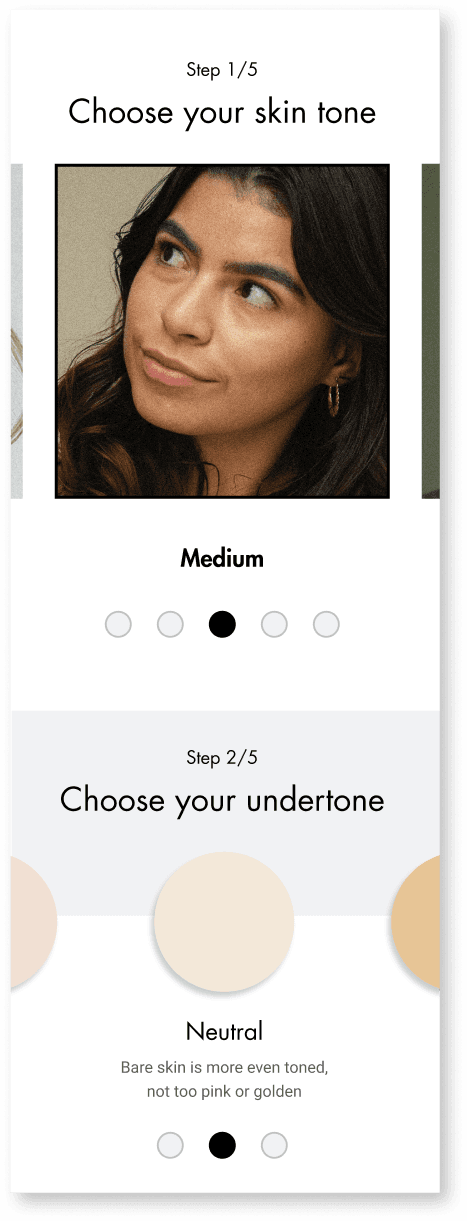
Offer a well-designed purchase form and the option to buy a sample for testing before the full product arrives.
Price the sample carefully - affordable, but not too low.
Show that the brand focuses on building long-term relationships, not just one-time purchases.

To ensure product scalability and allow for easy future expansion of the website or product range, a simple design system was created. All core visual elements were tokenized to maintain consistency and enable efficient updates.
